How to Write a Resume for a Fresher (With Tips and Examples)
Many freshmen have the difficulty of not knowing how to impress recruiters with their resumes. The first explanation could be that you have little to no experience while on campus.
As a result, freshmen have nothing particularly noteworthy to attract recruiters' attention. So, if you want to avoid a situation like this, why don't we travel back in time and join every relevant club or apply for many internships or trainee programs? But, sorry to disappoint you, life does not work that way.
The second reason is more important: you can only read this post about 7 tips for writing a cv for freshers right now.
What is a fresher resume?
A fresher resume is one that was written by someone who has recently graduated from high school or college and has little or no work experience. Freshmen candidates are more likely to use the functional resume structure than the more traditional chronological resume format. Instead of emphasizing your experience or lack thereof, a functional resume format emphasizes your talents and competencies.
Why is the format of your fresher resume so important?
Freshers require a different structure that focuses on their strengths while also showing them as a great candidates for the position they are going for, as most candidates build their resumes in a chronological format that focuses on their relevant experience.
With samples, learn how to format a CV for freshers
To write a resume geared for freshers, follow these steps and examples:
1. Look at the job description.
Every resume should be tailored to the abilities and traits required for success in the position you are seeking, as well as demonstrate that you share the employer's basic values. Reading the job description before writing your resume will assist you in deciding which keywords to put in your resume.
2. Make your contact information available.
All of your contact information should be listed in the first section of your resume, including your name, address (or city and state), phone number, and email address. Some people prefer not to provide their entire address, but if you live close to the job's office, giving your complete address may make you stand out.
In this part, some candidates opt to include links to their social media profiles, personal websites, personal blogs, or personal portfolios. If you use these types of connections in your resume, make sure everything on your profile is professional and reflects your desired personal professional brand.
Example contact information format:
Muller Kenny
8889 South Bend Avenue Milwaukee, Wisconsin
53201 (555) 555-5555
mullerkenny@email.com
Mullerkennyprofessionalblog.com
3. Come up with a strong summary statement.
A personal summary, which says who you are as a professional, what your career goals are, and why you are the ideal candidate for the position you are applying for, should be the following portion of your resume. A solid resume summary statement should demonstrate your knowledge and enthusiasm for the position you're seeking, as well as how you'll benefit the company.
For a newer resume, here's an example of a summary statement:
Recent college graduate with a bachelor's degree in business administration and a minor in accounting seeking an entry-level position as a Junior Accountant with a medium- to large-sized accounting firm where I can advance to senior positions.A dedicated professional who received high honors throughout college and was recognized by the senior accounting team for my contributions to year-end audits and predictions during my internship.
4. Select the talents you want to emphasize.
The next stage is to determine which of your technical hard talents and soft skills are most important to your success in the position you're looking for. Specific abilities that the company is searching for are frequently included throughout the job description. It's preferable to list your skills in a one- or two-column format that includes the expertise and your level of experience with it.
For a fresher CV, here's an example of a skills section:
Computer skills: Advanced
Mathematical skills: Advanced
Communication skills: Expert
Customer service skills: Expert
Critical thinking and problem-solving skills: Advanced
5. Emphasize your education, training, and credentials.
The education, training, and certifications you have should be highlighted in the following area of your resume. This could include your college major and minor, professional licenses and certificates, college certificate courses, and other professional training. You can also emphasize any distinctions, extraordinary grades, or scholarships you've received in this section.
Covering freshers, here's an example of a resume section for education, training, and certifications:
Licensed Health, Life and Annuities insurance agent (2-15 license)
April 2016 – Present
New York University, New York, NY
Bachelor of Science in Healthcare Administration
August 2015 – May 2019
National Honor Society Scholarship
Awarded 2016 – 2019
You can take your free professional by click here CV Templates
6. Include relevant experience on your resume.
If you don't have any professional work experience, that doesn't mean you don't have any relevant experience to put on your resume. While this part will not be the center of your resume, it is OK to include it if you have a relevant experience like internships, volunteer work, educational projects, or coursework that demonstrates your abilities and knowledge. The name of the experience or project, as well as a summary of what you did in these experiences that are relevant to the position you are applying for, should be included in this part.
For a fresher CV, here's an example of an experience section:
Youth Reach Out Charities, Las Vegas, Nevada
Volunteer Youth Coach
August 2017 – Present
- Youth Reach Out Charities is an organization dedicated to providing underprivileged, disadvantaged,e and at-risk youth the educational and real-world resources to inspire them to be an agent of positive change and growth within their communities.
- As a volunteer youth coach, it was my responsibility to work directly with teens in at-risk situations and provide them with the educational and motivational resources they needed to have a positive life impact
- This experience taught me the importance of giving back to our community and reaching out to others who are less fortunate to provide them with the tools they need to make a change
- I am most proud of the work I did directly with a young girl who recently dropped out of high school. She had to drop out so she could begin working during the day to help her mother pay the bills. After listening to the reasons she couldn’t complete her education in the traditional format I found the resources for her to enroll in night school and encouraged her to complete her GED.
7. Double-check your work.
Proofreading your resume is the final stage in developing a fresher resume. You can read your resume out loud or have it proofread by a friend or family member. This will assist you in identifying any spelling or grammar issues, checking for inconsistencies, ensuring that your resume shows the qualities that make you the greatest applicant for the job, and ensuring that your resume is honest and memorable.
Article source: https://www.cvsimply.com/
Documents You should submit with a Job Application
The company may request what is known as "supporting documentation" to complete your application. When you're applying for a job, an employer may want more information than just a copy of your resume and cover letter.

Be sure to follow all their instructions about what to send and how to send it. If not, feel free to ask the hiring manager or HR representative what kind of supporting documentation to send.
What Are Supporting Documents?
Generally, employers will specify which documents they would like you to include with your application.
Supporting documentation for a job application can include a resume, a cover letter, educational transcripts, writing samples, Veterans' Preference documents, portfolios, certifications, a reference list, letters of recommendation, and other documentation as specified in the job posting.
Why Do Employers Request Supporting Documentation?
Requesting documentation can also be a test of whether or not applicants can follow instructions. For instance, requiring a transcript as supporting documentation allows employers to confirm that you graduated, as well as your GPA.
The reason for requesting information is to get a complete picture of you as a candidate, or to confirm the details listed in your resume or job application.
Getting supporting documentation from candidates helps companies evaluate applications. For many employers, a resume provides all the information they require. However, other employers may need more information to determine which applicants they will interview and eventually hire.
How to Get Copies of Documents?
To request a copy of a transcript from an educational institution, send a written request to the registrar or guidance office, and ask to have your transcript sent directly to the employer. Some schools may allow you to request a transcript electronically, while others may require a formal letter.
The employer may request originals of certain documents, like transcripts. If that's the case, request them ahead of time from the institution where you received them.
How to Submit Supporting Documentation?
Applicants may find collecting and submitting documents to be less of a convenience, and more of a hassle. Some documents may require a bit of digging around to locate. It allows the hiring manager to have all the pertinent information about candidates on hand, and cuts back on follow-up emails and phone calls to request more documents.
You should also brief them on the job description and remind them about your relevant skills and qualifications for the role, so that they can make a solid case for you. For instance, if you're submitting a list of references, you'll need to ask permission to use them as a reference, and inform them that someone from the company may be in touch shortly.
Follow the Directions in the Job Posting
Employers may ask for you to upload files or attach them in an email. Once you have all the supporting documentation gathered up, follow the employer's instructions as to how to submit it. Submit all your documents at once. If you’re missing something, try to get a copy before submitting your application.
Bringing Documentation to a Job Interview
If the company asks for supporting documentation to be brought to the interview, bring a photocopy of each of the requested documents with you to leave with the hiring manager.
Why Cover Letter is Important for your Job?
Cover letters allow recruiters and hiring managers to develop a better understanding of your suitability for a position. A cover letter accompanies your CV as part of a job application. It provides further detail on how your skill set aligns with the role, what you can bring to the team and why you want the position.
What is a cover letter?
A covering letter is a one-page document addressed to the interviewer or potential employer that includes your contact details, the role you are applying for and further detail surrounding the information in your CV.
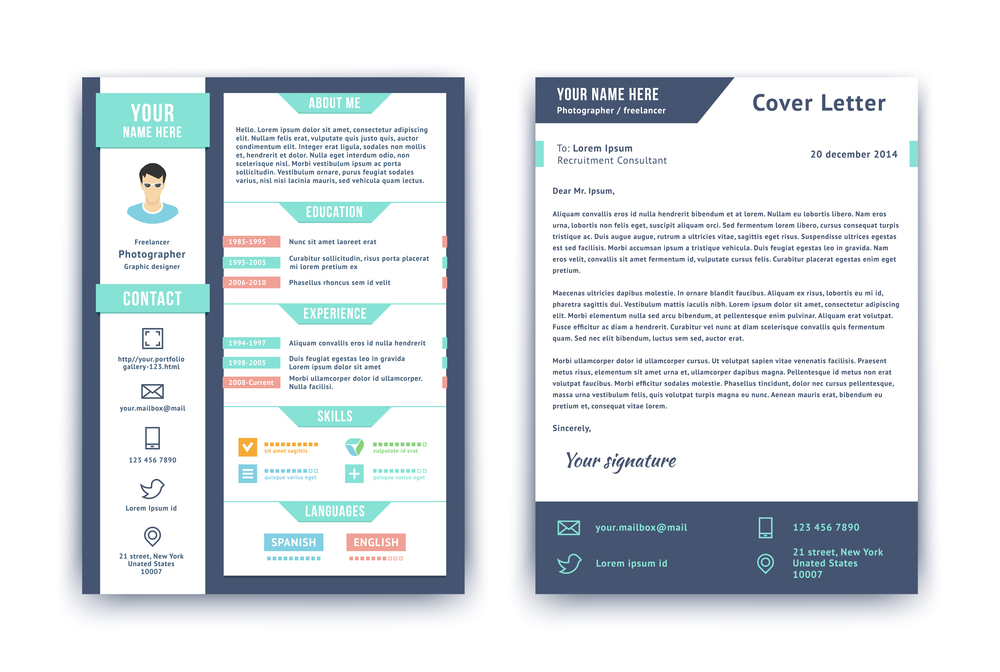
Within the letter, you should align your qualifications, relevant skills and previous experience clearly to the job description to emphasise. Also, cover letters should highlight your interest in the role and expand on your skills and experiences that make you best suited for the position.
How to write a winning cover letter?
Your cover letter must reflect the unique capabilities that you possess, which position you as an ideal candidate for the job you are applying for. During a recruitment process, recruiters and hiring managers may receive hundreds of CVs to review. The better applications will also include a cover letter.
A well-written cover letter is an opportunity to show the reader you encompass these key attributes:
- Value
- Literate
- Experienced
- Enthusiastic
- A unique candidate
How to structure your cover letter?
If you’re submitting your job application by email, you can include the letter in the body of the email. Structure your cover letter in a logical manner. This will show the employer that you have a rational approach.
Always include your name, mobile number and email address. Include the recipient's name and address, with the date in between.
See also: 7 common cover letter mistakes
1. Salutation
Personalise the letter to make sure it reaches the person who will be reviewing your application. Consider these tips:
- Check names and titles. You must spell these correctly.
- Don't assume the gender of the recipient. 'Jo', ‘Sam’ or 'Kim', for example, may be a man or woman. Phone to make sure or look online to see if you can work it out.
- If you don't know the name of the employer, phone the organisation. Ask the receptionist or the Human Resources department who the right person would be.
2. Opening paragraph
This helps the company determine the best way to advertise jobs. If someone referred you to this employer, mention that person's name. Introduce yourself briefly and state the position you're applying for. If you’re not applying for a named job, state your job objective.
Note where and when you found out about the position. Now make a strong statement that shows how valuable you would be to the employer. Give one good reason why you should be hired.
3. Your qualifications and skills
Write one or two paragraphs to show you can do the job. Show how your skills will meet the employer's needs. Your skills may be technical or personal. You may have gained them through previous jobs, education or training, work experience, voluntary work or other activities.
If you would be required to service customers, then communication skills would be important. Introduce two or three of your selling points and show how they will allow you to make an impact or get results in the role.
If you are approaching an employer directly, and there is no job advertisement, think logically about the skills required for the role. Your resume templates should outline your relevant skills, experience, training and achievements.
4. Your interest in working for the organisation
Here's where you show how motivated and enthusiastic you are, and how you can fit into the organisation. This may be their reputation, corporate culture or management philosophy. It could be their size, sales record, product quality or sense of environmental responsibility.
Your resume is usually the place to address any personal interests or activities that connect you with the company and its work. Make some positive comment about the company and let them know why you want to work there.
5. Closing paragraph
An impressive cover letter may persuade the recruiter that you're worthy of second-round consideration. Consider something formal such as: ‘Thank you for taking the time to consider my application. It’s important to finish off your cover letter in a professional manner.
I look forward to hearing from you in due course.’ You should then conclude with ‘Yours sincerely’ and your full name. Hopefully, you'll be well on your way to employment.
Best 3 Tips for Submitting a Cover Letter
In other words, if you simply repeat what’s in your resume on your cover letter, you’re only doing half of the job.
Your cover letter will lack the compelling pitch necessary to make a strong impression, and your application will likely be overlooked. Don’t waste your hard effort by sending a cover letter with small mistakes, or failing to follow submission requirements.

1. Proofread it first
Run a spell check, read it over at least three times, and even put it into a different font before reading it again. Don’t even think about submitting your cover letter until you’ve given it a thorough review.
2. Get a second opinion
Ask someone you trust to read your cover letter.They’ll likely pick up on any missed grammar errors or typos, too. They can help you assess its clarity, effectiveness, and readability.
3. Study the job listing’s submission requirements
Read through all the requirements in the job description, and follow the instructions perfectly. Don’t miss any small details and risk looking sloppy. Keep an eye out for instructions regarding:
- Attachment naming conventions: Did you include your name in the filenames for all attachments? e.g., “Naomi Smalls — Cover Letter.pdf”
- Required attachments: Have you included all necessary attachments, such as your resume, cover letter, and portfolio? Don’t forget the spelling of “resume” is important. If the instructions call it a “résumé,” you should use accents too.
- Subject lines: Is there a required format for the email subject line? e.g., [Name — Position]
- Other: Did you follow all other instructions? Some companies will include odd instructions that you must follow to see if you’re paying attention — like including a specific keyword on your cover letter.
Don’t Ignore Cover Letter Advice
A sloppy cover letter will do the opposite — so follow our tips, and land the job that you deserve. Writing cover letters isn’t particularly exciting, but it’s important to spend time and energy presenting yourself as a consummate professional.
Don’t give recruiters any excuse to think that you’re not a clear thinker, a strong writer, and a detail-oriented person.
The 8 Best People to Choose as Job References
Many people struggle to create their winning line-up of job references, even after several part-time jobs and years spent developing professional relationships. And, so you have a good feeling you’re going to nail your interview. After the interview, the potential employer will likely request references.

The 8 best people to choose as job references
Consider these eight people when making your reference list:
1. Co-workers
If you don’t get along with your boss, use a co-worker who is familiar with your work and worked directly with you. Furthermore, a work friend who doesn’t understand your job responsibilities won’t give the professional reference you need.
2. Recent bosses
Current or previous employers speak best about your work ethic. And, leaving your boss off your reference list gives the impression there’s a reason you didn’t want your future employer to contact them.
3. Professors
Professors teaching in a field related to the job you’re applying to make great references, and most are happy to help. However, your professor may not feel comfortable acting as your reference if they haven’t gotten to know you personally.
And, the effort to guarantee the professor you respect knows you as more than a face in the classroom.
4. Friends… but only if they’re a professional reference
Most of the time, leave your friends off your list of references.
There are two occasions when using a friend as your reference is acceptable:
They’re currently employed at the business to which you’re applying.
They were your supervisor.
5. Any place you’ve volunteered
People you volunteer for are likely willing to be your reference. Plus, volunteering impresses hiring managers. Furthermore, additionally, volunteering increases your chance of being hired by 27 percent, according to the Corporation of National and Community Service’s June 2013
6. Group members
ou probably worked on semester-long group projects while finishing your degree. Use your group members as references. Moreover, the project turned out fantastic.
7. The person you babysat for or whose lawn you mowed every summer
Think about the odd jobs you had while in high school and when you were home from college. Especially, a reference you’ve known for years lets employers know the consistency of your work ethic.
How to Negotiate Your Salary
Negotiating a better salary is something that everyone should be focused on. And, the time will come again when the value of work you do is not reflected in the compensation you receive for that work.
This guide will cover how to negotiate your salary, the basics of salary negotiations, how to find out your objective value from job market data, best practices for salary negotiations, how to negotiate a raise, and what you should do after a salary negotiation.

Definition of Salary Negotiate?
Salary negotiations are discussions between yourself and a representative of your current or prospective company that aim to help you secure a higher salary.
Furthermore, if you feel that your salary isn’t enough, you should feel empowered to negotiate in order to get what you deserve.
Why It's Important to Negotiate your Salary
It’s important to understand that negotiating your salary is a perfectly normal part of the employment process. And, your salary is more than a deposit to your bank account: it’s how your company shows you that they appreciate your work and value you and your skills.
Negotiating for some of these perks will help you to get the complete salary and benefits package you need:
- Mentoring + Coaching: This perk is nearly priceless because it can lead to professional growth and the growth of interpersonal relationships with talented leaders in the company.
- Health + Fitness: Other than medical and/or dental insurance, negotiating for health and fitness benefits
- Training, Professional Development and Certifications: Not every company offers effective professional development and/or certification programs. Moreover, career-minded professionals should be sure to negotiate for professional development resources.
- University Tuition Reimbursement: College tuition is only getting more expensive, and negotiating for tuition reimbursement is highly appealing for people who want to continue their education.
How to Find Out What You're Worth
Salaries range greatly by industry, seniority, and geography, and getting the salary you want will depend on asking for a realistic compensation package.
Furthermore, before you go into a salary negotiation, you must objectively determine how much someone in your position should be paid with your experience and in your location.
How to start a resume summary statement
The first we need know What is a resume summary statement? a resume summary statement is a short paragraph at the beginning of a resume that highlights a job seeker’s professional skills and experience.
It gives hiring managers a glimpse into the job seeker’s expertise before diving into their resume. And, the goal of a summary statement is to demonstrate the job seeker’s unique value through their skills and accomplishments.

The summary statement typically sits right below the job seeker’s contact information and right above the body of the resume. Furthermore, a resume summary statement is often referred to by other names, including:
- Professional summary
- Qualifications summary
- Summary of experience
- Summary of qualifications
- Career summary
- Competencies
A strong summary statement can be just what a resume needs to stand out from the pack. And, as hiring managers may read through hundreds of resumes in a week.
When to use a resume summary section
Resume summaries are ideal for job seekers who have many years of work experience in the same field (and will be continuing in that field). And, on the other hand, resume summary statements are not always ideal for job seekers with little experience or notable gaps in their resume.
If you have been working in the same field for less than 10 years, it might serve your resume best to forego the summary statement and use the extra space to expand your work experience.
Objective statement and Resume summary
The resume summary statement is likely the introductory statement you remember using in decades past. And, it focuses on the job seeker’s needs and future goals, with no mention of the those of the company.
Alternatively, a career summary is geared toward the employer’s needs and highlights accomplishments and notable skills related to the job. The resume objective statement, on the other hand, left the hiring manager with more questions than answers.
Furthermore, after reading the career summary above, the hiring manager has a better understanding of the job seeker’s impressive abilities.
How to write a summary statement for a resume
When writing a summary statement, think about your “elevator pitch.” Furthermore, for example, if you stepped into an elevator and saw the hiring manager who holds the keys to your dream job.
Using the job posting, determine what value can you bring to the company. And, consider the strengths, experiences, and accomplishments that are unique to you and write each of them down as you brainstorm.
